Southeast Asia Bucket List: Stunning Beaches, Temples & Adventures
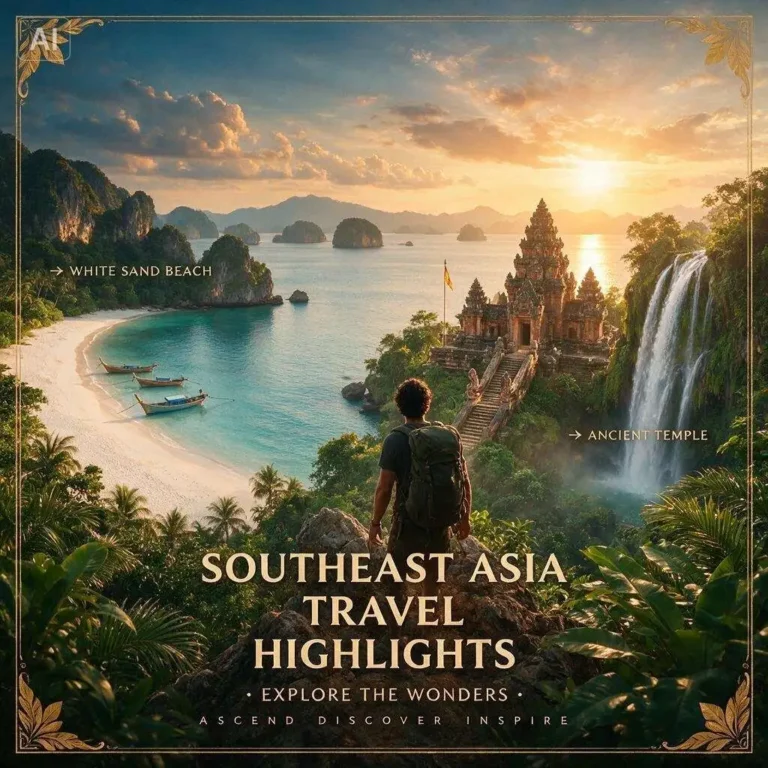
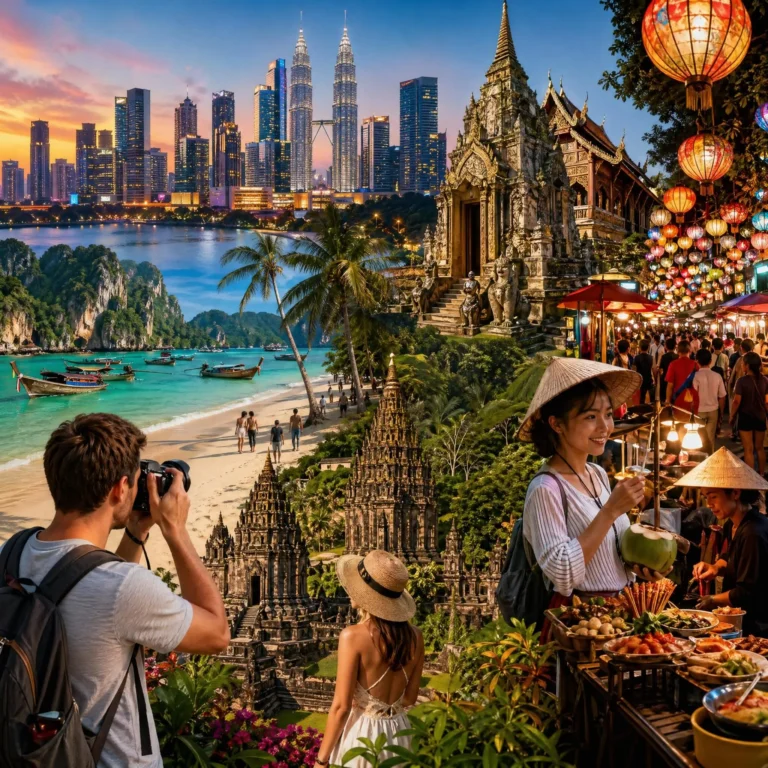
Picture this: one morning you’re snorkeling above neon coral gardens, by afternoon you’re wandering through stone temples carved a thousand years ago, and by sunset you’re zip-lining through a steamy jungle canopy. That’s not a fantasy—that’s a typical week on any well-planned Southeast Asia bucket list.
Beginners fall head-over-heels for this region because it’s forgiving, affordable, and absolutely packed with variety. You don’t need to be a seasoned backpacker to navigate bustling Bangkok or find your footing on a Thai island. The infrastructure is solid, English is widely spoken in tourist hubs, and the locals have a warmth that makes you feel welcome from the first sawasdee.
In this guide, I’ll share exactly why Southeast Asia should top your travel wishlist, highlight the best beaches in Southeast Asia, the most breathtaking temples in Southeast Asia, the wildest adventure travel Southeast Asia has to offer, and practical steps to plan a trip you’ll never forget. Let’s dive in.
Why Southeast Asia belongs on every bucket list
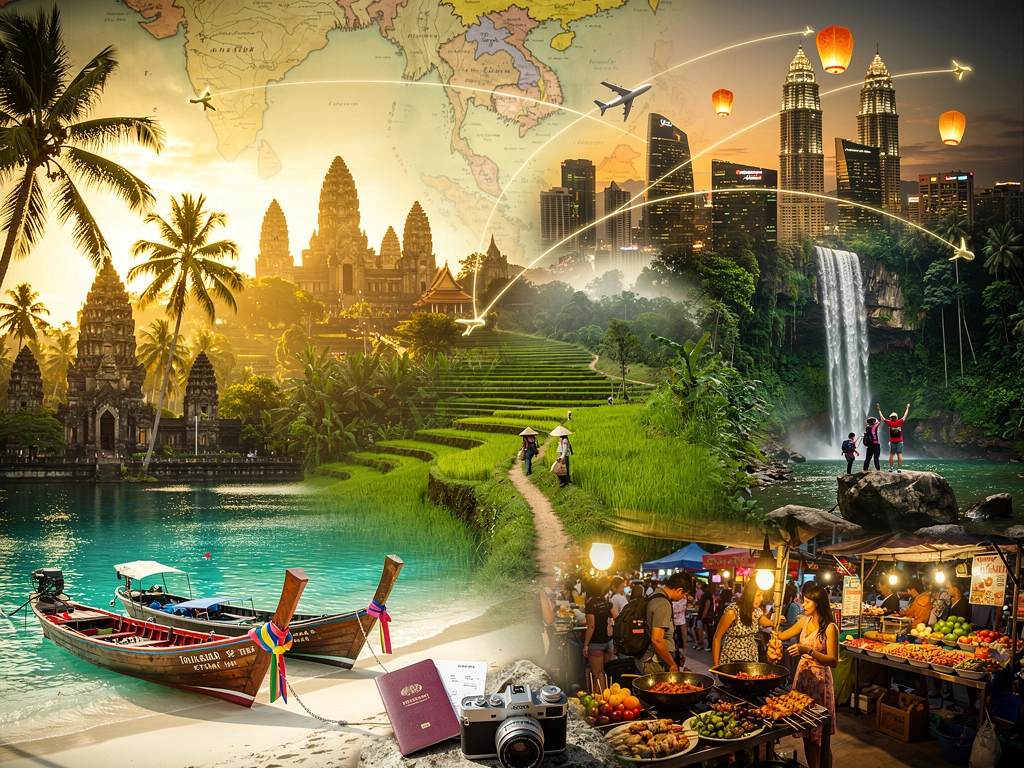
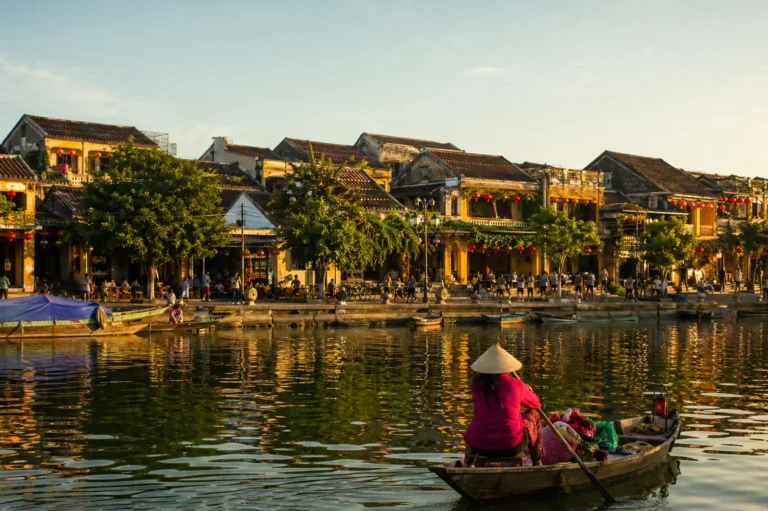
Southeast Asia isn’t just a destination—it’s a full sensory experience. The smell of lemongrass and diesel, the sound of monks chanting at dawn, the sight of limestone cliffs rising from electric-blue water. And here’s the real kicker: it’s affordable enough that you can travel for weeks on what you’d spend in a long weekend in Europe.
The diversity is staggering. Within 500 miles, you can go from hyper-modern Singapore (think rooftop infinity pools and Michelin-starred street food) to remote hill tribe villages in northern Laos where electricity is still a luxury. You can sleep in a 6 hostel bunk or a 200m overwater bungalow. That range makes the Southeast Asia bucket list accessible to students, families, and luxury travelers alike.
The learning curve is gentle. Unlike some regions where you need to master complex train schedules or speak the local language just to eat, Southeast Asia’s tourist trail is well-worn and well-marked. Apps like Grab (ride-hailing) and Agoda (hotels) work seamlessly. ATMs are everywhere. And the famous “banana pancake trail” means you’re never far from a fellow traveler who can point you in the right direction.
But the real magic? The people. I’ve had tuk-tuk drivers become impromptu tour guides, monks offer me tea and conversation, and homestay hosts cook me dinner just because “you are family now.” That hospitality isn’t performative—it’s cultural. In Buddhist-majority countries, kindness is a daily practice. You’ll feel it.
Actionable tip: Start your journey in Thailand. It’s the ultimate gateway. Spend 3–4 days in Bangkok (get lost in Chatuchak market, take a ferry to Wat Arun), then fly or train north to Chiang Mai for temples and jungle, or south to Krabi for beaches. After a week or two, hop to Cambodia, Laos, or Vietnam. The connections are simple and cheap.
Best Beaches & Tropical Islands
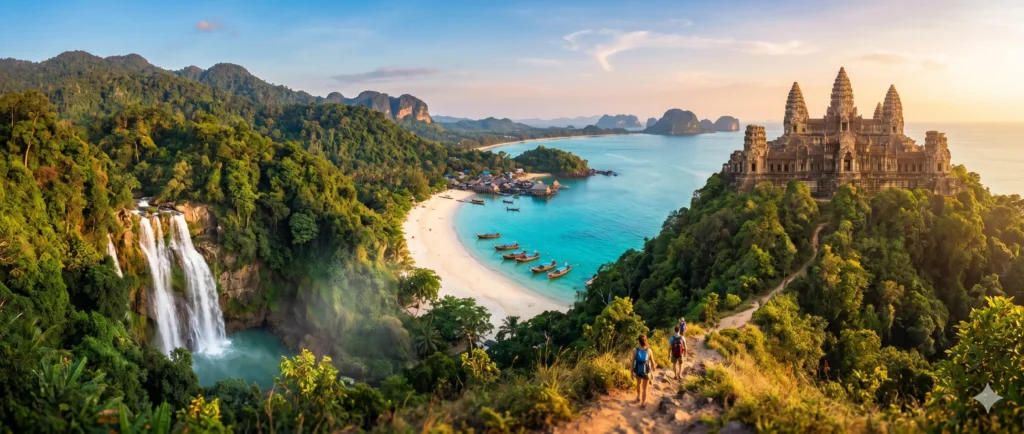
When people dream of beaches in Southeast Asia, they usually imagine powdery white sand, swaying palm trees, and water the color of a gemstone. Good news: that place really exists. Actually, dozens of them do.
Thailand’s Andaman Sea gems
The west coast of Thailand (Andaman Sea) is where postcards come to life. Railay Beach (accessible only by boat) is a climbing paradise with soft sand and dramatic limestone walls. Go early morning before the long-tail boats arrive—you’ll feel like you’ve discovered a secret. Phi Phi Islands are more crowded but undeniably stunning. Instead of Maya Bay (which is often closed for restoration), take a long-tail to Loh Samah Bay for snorkeling with leopard sharks.
Pro tip: The best time for Andaman beaches is November to April. From May to October, choppy seas and rain make ferry rides unpleasant, and many island resorts close for the low season.
Philippines: The last frontier
If you want remote, the Philippines delivers. El Nido (Palawan) is a labyrinth of karst islands, hidden lagoons, and beaches that look untouched. Take Tour A for the Big Lagoon or Tour C for Secret Beach. For even more solitude, head to Port Barton—a sleepy fishing village with turquoise water and far fewer tourists.
Budget hack: Fly into Puerto Princesa, then take a van to El Nido (10$–15$,5–6hours). Skip the expensive island−hopping tour that packs 30 people onto a boat; find a local boat man at the dock and negotiate a private trip for 40$–50$ total (split among 4–6 friends).
Indonesia beyond Bali
Bali’s beaches are fine (Kuta is crowded, Sanur is okay), but the real treasures lie east. Gili Islands (Gili Trawangan, Gili Air, Gili Meno) have no motor vehicles—you cycle or take horse carts. Gili Meno is the quietest, with a turtle sanctuary off its east coast. Even better: Nusa Penida has Kelingking Beach (that famous T-rex cliff) and Diamond Beach. But be warned—the roads are terrible, so rent a scooter only if you’re confident.
Expert tip: Check the tides before visiting any “sandbar” beach. In places like Koh Lipe (Thailand) or Gili Islands, the water can recede dramatically at low tide, exposing sharp coral. Morning high tide offers the classic postcard view.
Off-the-radar beaches
- Koh Rong Samloem, Cambodia – Bioluminescent plankton at night. Swim after dark and watch your movements leave trails of blue light.
- Ngapali Beach, Myanmar – Powdery sand, almost zero crowds, and fresh grilled squid for $2. (Check current political stability before booking.)
- Con Dao Islands, Vietnam – A former prison island turned marine park. Turtles nest here from June to September.
What to skip: Patong Beach (Phuket) is loud, packed with jet skis, and crowded with touts. Fine for a day of people-watching, but not where you’ll find paradise.
Famous Temples & Cultural Sites

The temples in Southeast Asia aren’t just old buildings—they’re living, breathing centers of faith and history. Some are massive complexes, others are single golden spires hidden in jungle thickets. Here’s where to focus your energy.
Angkor Wat, Cambodia – The heavyweight
Let’s get this out of the way: Angkor Wat deserves every ounce of hype. It’s the largest religious monument in the world, and waking up at 5 AM to watch the sunrise behind its iconic lotus towers is a rite of passage. But don’t stop there.
Your strategy: Buy a 3-day pass ($62). Day 1: Angkor Wat sunrise, then Bayon Temple (216 smiling stone faces), then Ta Prohm (the “Tomb Raider” temple with trees growing through ruins). Day 2: Preah Khan (massive, less crowded) and Banteay Srei (red sandstone carvings so detailed they look laser-cut). Day 3: Rolous Group (earlier, quieter temples) and a sunset at Phnom Bakheng (get there by 4 PM to climb before the 300-person limit).
Pro tip: Hire a local tuk-tuk driver for the whole day ($15–20). They know the best routes, the quiet back entrances, and the shade spots for midday breaks. And bring a scarf to cover your knees—security is strict.
Bagan, Myanmar – A thousand spires
Imagine 2,200 ancient pagodas spread over a grassy plain, with hot air balloons floating at sunrise. That’s Bagan. An e-bike lets you explore at your own pace. Climb the permitted temples (like Pyathada Paya) for panoramic views—most climbing has been banned for safety, but a few remain open.
Important note: As of 2025, parts of Myanmar remain unstable due to civil conflict. Check your government’s travel advisory. If it’s not safe, substitute with Sukhothai Historical Park in Thailand—it’s smaller but equally atmospheric, and you can bike through ancient ruins with almost no tourists.
Borobudur, Indonesia – The mandala on a hill
Borobudur is a 9th-century Buddhist temple shaped like a mandala. You walk through three levels of carvings (representing the realm of desire, the realm of forms, and formlessness) before reaching the top stupas with seated Buddha statues. Go for the sunrise tour—the mist over Merapi volcano is hauntingly beautiful.
Ticket strategy: The sunrise package costs around (including breakfast and a flashlight). Standard day entry is about 25$. It’s pricey for Indonesia, but the experience is unique. Book online at least a week ahead, as they limit daily visitors.
Hidden temple gems
- Wat Rong Khun (White Temple), Chiang Rai, Thailand – A contemporary art installation disguised as a temple. Surreal, dazzling, and packed with pop culture references (Superman, Freddy Krueger, and the Millennium Falcon).
- Wat Phu, Laos – A Khmer temple pre-dating Angkor, perched on a mountainside overlooking the Mekong. Very few tourists. Combine with a river cruise from Champasak.
- Pura Besakih (Mother Temple), Bali – The holiest Hindu temple in Bali, sitting on the slopes of Mount Agung. Wear a sarong and sash (rent for $1).
Expert tip: Temple fatigue is real. After three temples in a day, your brain stops registering details. So pace yourself: one major temple in the morning, then a break for lunch and a swim, then maybe a smaller temple at sunset. Your camera (and your feet) will thank you.
Epic Adventure Activities
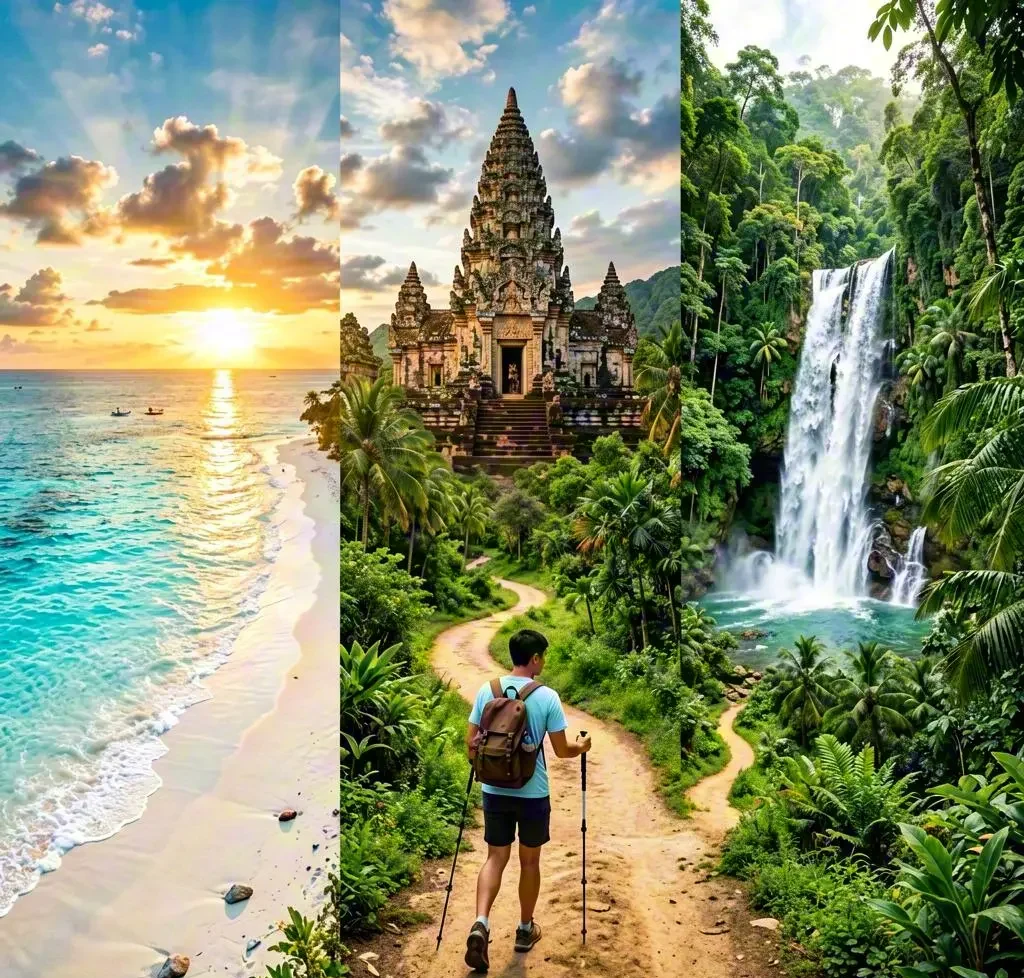
If you crave movement, adrenaline, and a little bit of “I can’t believe I did that,” then adventure travel Southeast Asia will spoil you rotten. The landscape here—jungles, limestone karsts, endless coastlines—is basically a playground for thrill-seekers.
Diving and snorkeling
Southeast Asia is the cheapest place on Earth to get scuba certified. In Koh Tao, Thailand, an Open Water course costs around 250(including equipment and accommodation).Compare that to 500$+ in the Caribbean. The visibility is excellent (15–30 meters), and you’ll see whale sharks, turtles, barracuda, and colorful nudibranchs.
Best dive spots:
- Similan Islands, Thailand – Liveaboard trips from November to May. Sightings of manta rays and whale sharks are common.
- Sipadan, Malaysia – A oceanic island with a 600-meter drop-off. You need a permit (daily quota), but it’s worth every ringgit. Green turtles are guaranteed.
- Komodo, Indonesia – Dive with giant manta rays and pelagics. Just don’t skip the land tour for the dragons themselves.
Beginner tip: If you’re not sure about diving, try a “discovery scuba” session (half-day, shallow water). Or just snorkel—many sites are accessible from the beach. In Koh Lipe, you can snorkel with blacktip reef sharks in knee-deep water at sunrise.
Rock climbing
Railay Beach, Thailand is the Asian capital of sport climbing. The limestone here is sharp, grippy, and overhanging in all the right ways. Grades range from 5a (beginner) to 8a (pro). You can hire a guide for $40 for a half-day, including gear.
Safer alternative: If Railay feels too busy, head to Crazy Horse, near Chiang Mai – over 200 bolted routes set in a quarry with shade and a cafe. Or Cat Ba Island, Vietnam for deep-water soloing (climbing above the ocean without ropes, falling into water). Deep-water solo trips cost about $60 for the day.
White-water rafting & kayaking
Vang Vieng, Laos used to be a wild party town. Now it’s an adventure hub. The Nam Song River has Class II–III rapids (perfect for beginners) during the rainy season (July–October). Combine rafting with kayaking through limestone canyons. A full-day trip runs $25–30, including lunch.
More intense: Padas River, Borneo (Malaysia) – Class III–IV rapids through jungle gorges. You take a rickety train to the starting point. It’s a full-on expedition.
Jungle trekking & wildlife encounters
- Khao Sok National Park, Thailand – Stay in a floating bungalow on Cheow Lan Lake. Trek to see wild elephants, gibbons, and the rare rafflesia flower (which smells like rotting meat). Overnight tours from $80.
- Taman Negara, Malaysia – One of the world’s oldest rainforests (130 million years old). Do the canopy walkway (40 meters high) and a night safari to see leopards and civets.
- Bako National Park, Borneo – Proboscis monkeys (the ones with the big noses) are almost guaranteed. You’ll need to take a small boat from Kuching.
Ethical warning: Avoid elephant riding or any attraction where animals are chained, painted, or performing. Instead, visit Elephant Nature Park (Chiang Mai) or Phnom Tamao Wildlife Rescue Center (Cambodia) where you can observe rescued animals without exploitation.
Hidden Natural Wonders
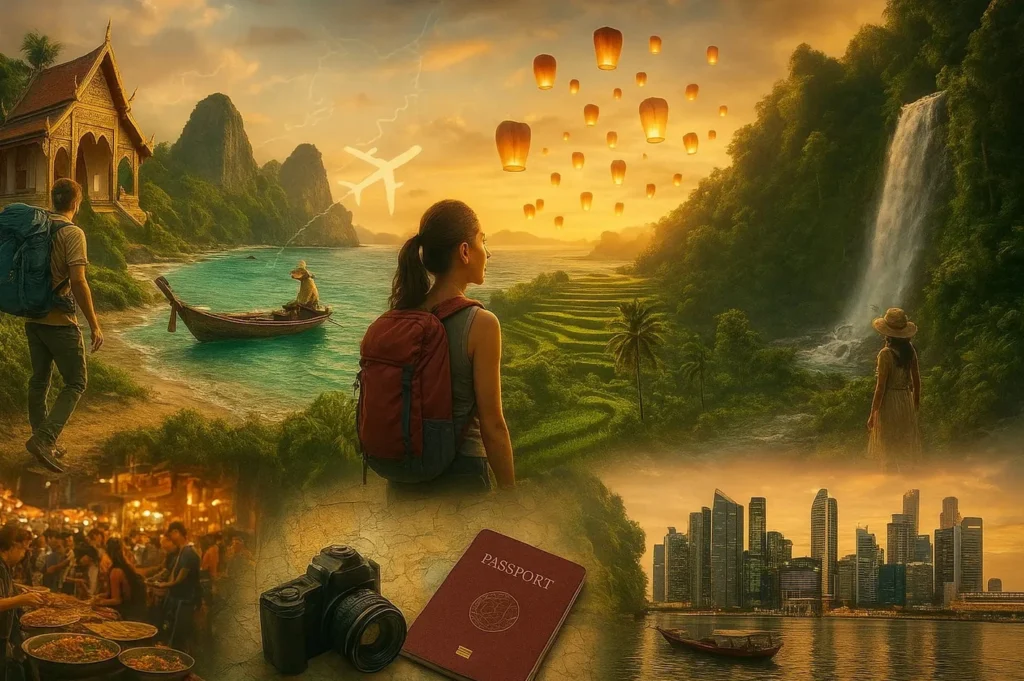
Your Southeast Asia bucket list shouldn’t just be the famous spots. Some of the region’s best treasures are off the main trail—places where you don’t have to fight for a photo or listen to a hundred selfie sticks clicking at once.
Ha Long Bay alternatives
Ha Long Bay (Vietnam) is gorgeous but crowded and polluted. Instead, go to Lan Ha Bay (neighbor to the south) or Bai Tu Long Bay (northeast). Both have the same karst scenery but a fraction of the boats. A 2-day, 1-night cruise on Lan Ha costs about $120 (private room, kayaking, meals included).
The Green Canyon, West Java
Most tourists hit Bali and skip Java entirely. Big mistake. Green Canyon (Cukang Taneuh) is a river that flows through a jungle ravine, with turquoise water and mossy limestone walls. You ride a small boat upstream, then swim through narrow passageways with waterfalls cascading from above. Entry is around 5,plus5,plus10 for a local guide with a boat.
Kuang Si Falls, Laos
Yes, this one is famous—but for good reason. The water is an unreal shade of blue-green, and the main pool is perfect for swimming. However, most tourists take a photo at the bottom and leave. Insider move: Hike the trail to the top of the falls. There’s a hidden pool with no crowds where you can stand under the cascade like your own private shower. Arrive by 8 AM (tours arrive at 10) for solitude.
The Plain of Jars, Laos
Thousands of massive stone jars (some weighing over a ton) scattered across a mysterious plateau. No one knows exactly why they were created—theories range from funeral practices to rice whiskey storage. It’s UNESCO-listed, remote, and deeply strange. Hire a guide to avoid unexploded ordnance zones (UXO clearance has been done, but still, stick to marked areas).
Mistake to avoid: Don’t assume a place is “off the beaten path” just because it’s not on Instagram. Even remote spots like Kuang Si get packed by 10 AM. Always wake up early—sunrise to 9 AM is your golden window for solitude.
How to Plan the Perfect Trip
Planning your Southeast Asia bucket list can feel overwhelming with so many options. But it’s actually simple when you break it down.
Step 1: Choose your season. November to February is peak (dry and cool). March to May is hot (35–40°C in Thailand and Cambodia). June to October is monsoon—but don’t avoid it entirely. Rain usually comes as a 1-hour afternoon downpour, leaving the rest of the day fresh and green. Plus, prices drop by 40%. Just avoid the Andaman coast (Thailand west) from May to October, and stick to the Gulf side (Koh Samui, Koh Phangan).
Step 2: Pick 2–3 countries max for a 3-week trip. For a first timer, Thailand + Cambodia (Angkor) + Laos is a great loop. Or Vietnam + Cambodia. Or just Thailand for 2 weeks. Trying to see 5 countries in 3 weeks means you’ll spend half your days on buses, exhausted and sick of packing.
Step 3: Book your first few nights and your departure flight—leave the rest flexible. Southeast Asia’s low season doesn’t require advance bookings. You’ll get better prices by walking into guesthouses and negotiating. The only exceptions: full moon parties (Koh Phangan, book 2 months ahead) and peak Christmas/New Year weeks.
Step 4: Pack light. Seriously. One carry-on size backpack (40 L) is enough. You’ll wear shorts, tank tops, swimwear, and a light jacket for air-conditioned buses. Laundry costs $1–2 per kg. Leave the hiking boots and jeans at home—they’re too hot.
Step 5: Get your visas in order. Thailand, Malaysia, Singapore, Indonesia (for many nationalities) are visa-free. Vietnam requires an e-visa (apply online, 25,3days).Cambodiaoffersvisa−on−arrival(25,3days).Cambodiaoffersvisa−on−arrival(30, bring two passport photos). Laos also visa-on-arrival ($40). Check your country’s embassy site before booking flights.
Budget breakdown (per day, mid-range):
- Accommodation: $15–25 (private fan room, sometimes AC)
- Food: $8–12 (street food + one sit-down meal)
- Transport: $5–15 (local buses, tuk-tuks)
- Activities: 5–20(templeentry,snorkeltours)∗∗Total:5–20(templeentry,snorkeltours)∗∗Total:35–70 per day.** For two weeks, plan on $500–1000 plus flights.
Frequently Asked Questions
1. How long should my Southeast Asia bucket list trip be?
For a first visit, aim for 14–21 days. That’s enough time to see two countries (e.g., Thailand and Cambodia) without rushing. If you only have 10 days, stick to one country—northern Thailand (Chiang Mai, Pai, and a detour to Luang Prabang) or southern Vietnam (Ho Chi Minh to Hoi An). Anything shorter than a week isn’t worth the jet lag.
2. Is it safe to travel solo as a woman?
Yes, thousands do. Use common sense: avoid walking alone after midnight, stay in well-reviewed hostels or hotels, share your itinerary with someone, and use Grab (not street taxis) at night. The region is generally safer than many Western cities in terms of violent crime, but petty theft happens—keep your phone hidden on busy streets.
3. Do I need vaccines before going?
Yes. Hepatitis A and typhoid (food/water-borne) are strongly recommended. Tetanus and flu are standard. Depending on your activities, consider Japanese encephalitis (if spending a month in rural farms) or rabies (if you plan to handle street dogs). See a travel clinic 6–8 weeks before departure.
4. What’s the one thing you regret not doing on your first Southeast Asia trip?
Not staying longer in one place. I rushed from city to city, ticking temples off a list. Now I know it’s better to spend a week in a smaller town like Pai (Thailand) or Kampot (Cambodia)—rent a bike, find a favorite café, make friends. The magic happens when you slow down.
Conclusion
Your Southeast Asia bucket list is more than a checklist of famous names—it’s an invitation to experience a part of the world that will surprise you, challenge you, and quite possibly change you. The beaches in Southeast Asia are postcard-perfect, sure. The temples in Southeast Asia will humble you with their scale and artistry. And the adventure travel Southeast Asia offers—from diving with whale sharks to climbing jungle waterfalls—will make your heart race in the best way.
But here’s what the brochures don’t tell you: the best moments are unplanned. A spontaneous motorbike ride into the rice fields, a conversation with a monk about happiness, a night of karaoke with locals who don’t speak your language but still make you feel like family.
Don’t wait for the perfect time or the perfect budget. Start now. Book a flight to Bangkok or Ho Chi Minh City. Pack light. Leave your worries behind. And let Southeast Asia work its slow, humid, beautiful magic on you.
Ready to build your own Southeast Asia bucket list? Share your dream itinerary in the comments below, or pin this guide to save for later. And if you’ve already been, tell me one hidden spot I missed—I’m always looking for the next adventure.